Understand the starting point
We begin with a complete diagnostic and treatment history, veterinary direction, input from your care team, movement history, current capacity, and the horse’s response to work.

EQUINE REHABILITATION · MONROE, WA
Specialized movement retraining for horses cleared to return to active work.
Discuss your horse
THE TRANSITION TO PERFORMANCE
Seven Hills provides individualized in-hand and ridden rehabilitation at our private facility in Monroe, Washington. Owners send horses from across the United States and Canada. Each program follows veterinary guidance and the horse’s physical needs.
We address compensatory patterns, postural weakness, and asymmetry while rebuilding strength, coordination, balance, and confidence. For horses with chronic or complex conditions, the program is adapted to what they can do comfortably and how they can continue to progress.
Program eligibility: Horses must be cleared by their veterinarian for active movement. Seven Hills does not provide stall rest or medical management.
CONDITIONS & GOALS
Owners often arrive with a specific problem: a horse returning to work after injury, persistent asymmetry under saddle, loss of topline and postural strength, or a veterinary diagnosis that changes how the horse should be conditioned.
Within veterinary direction, we translate those needs into progressive movement work. Plans may support horses rebuilding after stifle, hock, or back problems; horses learning new coordination after a period of compensation; and horses that need better body awareness before normal training can resume.
Our role is not to diagnose or replace medical care. It is to provide the consistent neuromuscular re-education, postural training, and carefully graded ridden work that help bridge veterinary clearance and sustainable performance.
MOVEMENT WITH PURPOSE
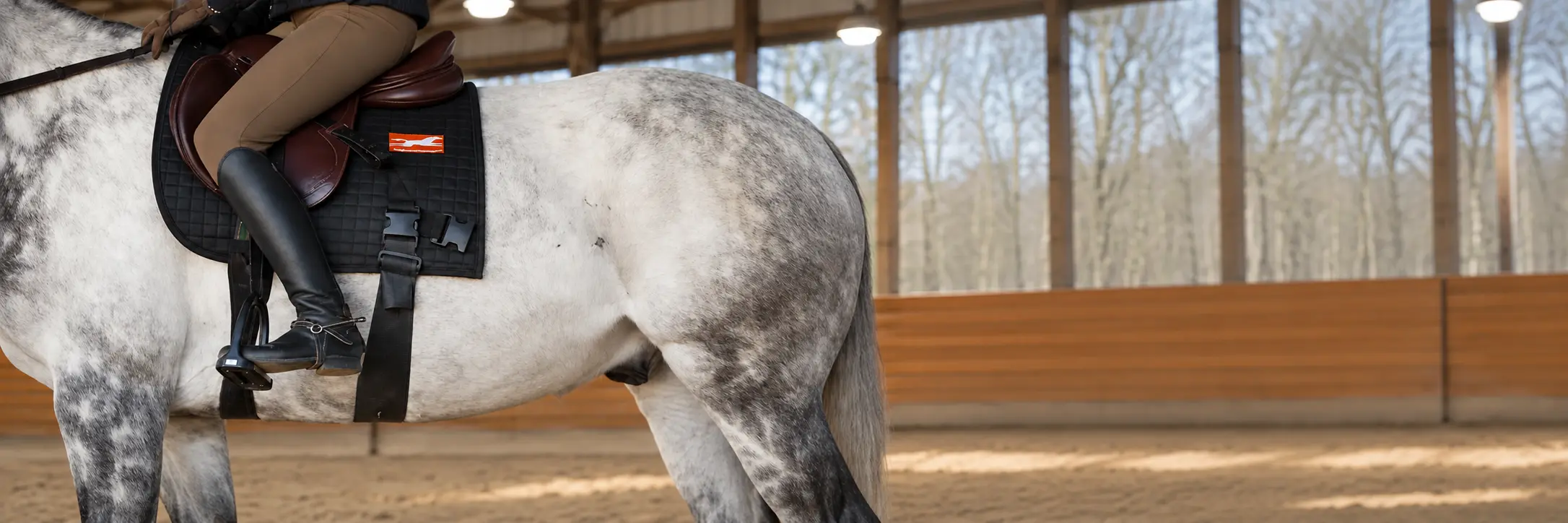
Progressive gymnastic work helps the horse organize their body, restore symmetry, and develop the postural strength needed to carry themselves well.
Building the physical foundation for a stronger, more sustainable return to work.
OUR APPROACH
We begin with a complete diagnostic and treatment history, veterinary direction, input from your care team, movement history, current capacity, and the horse’s response to work.
Groundwork, in-hand exercises, and ridden work are used to rebuild body awareness, balance, coordination, straightness, and core stability.
Workload increases only as the horse develops the strength, balance, and confidence to move without returning to compensatory patterns.
VETERINARY COLLABORATION
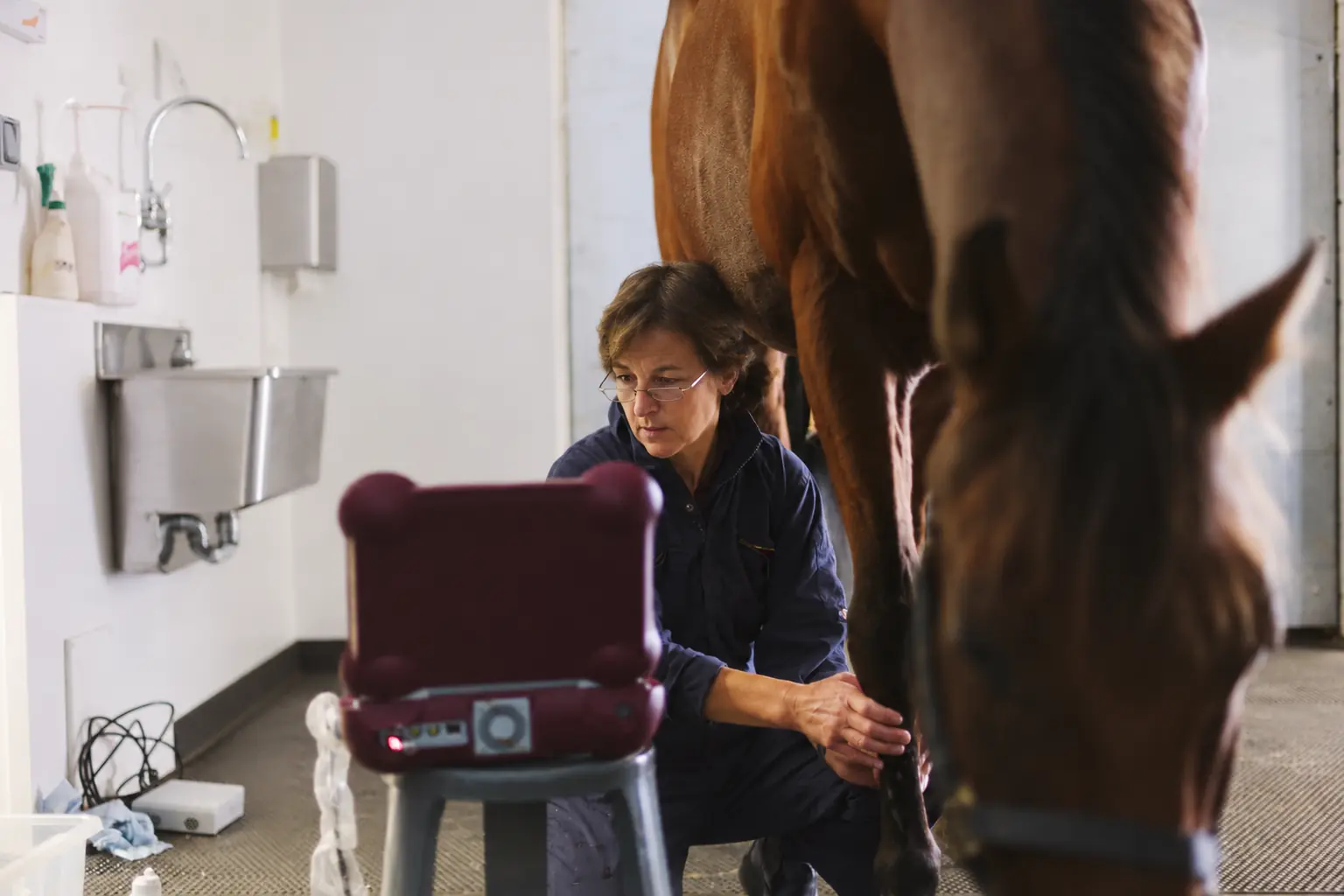
Seven Hills welcomes veterinary referrals for horses cleared to begin controlled movement, groundwork, or ridden rehabilitation. We take the veterinarian’s diagnosis, restrictions, and return-to-work goals and build them into a progressive rehabilitation program.
We stay in communication with the referring veterinarian and the horse’s care team, provide observations and progress updates when requested, and send the horse back for reassessment if something falls outside our scope of practice.
Refer a rehabilitation caseSERVICES & COORDINATED SUPPORT
Progressive movement retraining remains at the center of the program. When appropriate, we add therapeutic support to improve comfort, support recovery, and help the horse use their body more effectively.
Each plan is tailored to the horse’s history, current condition, and veterinary / care team recommendations.
Focused training sessions designed to restore symmetry, straightness, and correct muscle engagement once a horse is cleared for a rider.
Biomechanics-informed lunging and work-in-hand develop postural strength, coordination, and core stability without the weight of a rider.
Used selectively to encourage correct use of the topline, improved postural balance, functional core engagement, carrying power, and self-carriage.
Targeted sensory input through the hoof supports balance, body awareness, neuromuscular coordination, postural organization, and movement quality.
Used to support circulation, muscle activation, and overall comfort, particularly when horses are rebuilding strength or managing periods of limited exercise.
Incorporated to support mobility, flexibility, balanced muscle function, healthy range of motion, and tissue recovery throughout rehabilitation.
Cold therapy and compression may support inflammation management, while heat and red-light therapy encourage muscle relaxation and preparation for movement.
Pulsed electromagnetic field therapy supports comfort, circulation, recovery, soft-tissue relaxation, blood flow, and overall tissue health.
Used to support tissue healing, reduce inflammation, and promote circulation at a cellular level, assisting recovery and comfort during rehabilitation.
Applied strategically to support soft-tissue function, proprioception, postural awareness, movement, and comfort during rehabilitation and return to work.
Used to support pain management, neuromuscular balance, and tissue health when appropriate within a rehabilitation or conditioning program.
Integrated selectively to support joint mobility, alignment, and musculoskeletal function in service of sound movement and long-term comfort.
Incorporated to support soft-tissue health, relaxation, recovery, and overall comfort.
Considered as part of rehabilitation planning to support comfort, symmetry, and correct movement as horses return to work.
Integrated into rehabilitation planning to support alignment, comfort, and long-term soundness when hoof care is a contributing factor.
COMMON QUESTIONS
After veterinary clearance, the program may combine groundwork, work in hand, pole exercises, progressive conditioning, and ridden rehabilitation. The plan is adjusted to the horse’s diagnosis, restrictions, current capacity, and response to work.
Yes, when the horse has been evaluated and cleared for active work. We look at compensatory patterns, straightness, coordination, body awareness, and postural strength, then build exercises that help the horse organize more symmetrically.
We consider cases individually and work within the referring veterinarian’s diagnosis and restrictions. Horses must be cleared for controlled movement; Seven Hills does not provide stall rest or medical management.
It is progressive movement work that helps a horse improve body awareness, coordination, balance, and recruitment patterns. At Seven Hills, this may include carefully selected in-hand, ridden, pole, and proprioceptive exercises.
REHABILITATION AT SEVEN HILLS
Tell us where your horse is now and where you hope to go next.
Request a consultation